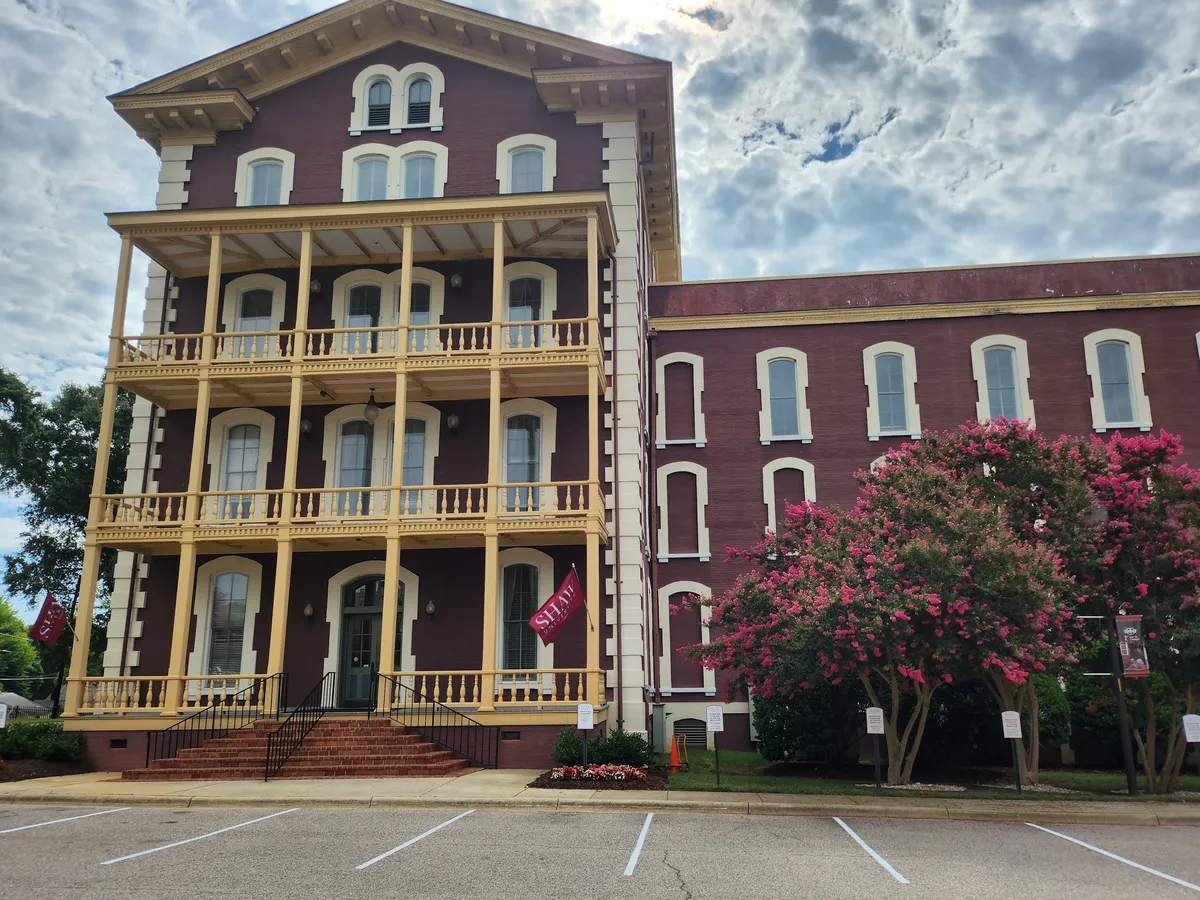
Shaw University: Where Black Higher Education in the South Began
Shaw University is a private HBCU in downtown Raleigh, North Carolina, founded in 1865 as the first historically Black college or university in the American South. Enrollment is approximately 1,100 students. The all-in cost of attendance runs about $31,488 per year. Shaw fits students who want a tight-knit, mission-driven campus and an affordable private education.
A School With a Story Worth Knowing
Some campuses sell you a brand. Shaw University, in downtown Raleigh, North Carolina, does something different. It hands you a piece of history and lets it speak for itself.
Shaw is the first HBCU in the American South, founded in 1865, the year the Civil War ended. I spent a morning walking the campus, and the thing that stayed with me was not a single building. It was the sense that this is where a much larger story started.
What an HBCU Is, and Why It Matters at Shaw
Before we talk about Shaw specifically, it is worth saying plainly what an HBCU is, because the mission explains almost everything else about this school.
HBCUs were created to open higher education to Black students at a time when white institutions refused them entry. The purpose was access for the people that other institutions had decided were not worthy of a seat. And that mission was never narrow. HBCUs are for everyone. They are historically Black, not exclusively Black.
Shaw is where that mission began in the South. Reverend Henry Martin Tupper founded it in 1865, and Shaw graduates went on to found and lead other HBCUs across the region. When people describe Shaw as a starting point, they are being literal.
A Legacy of Firsts
Shaw's history reads like a list most universities would build an entire identity around.
Estey Hall, which still stands on campus, opened in 1873 as the first college building in the country constructed for the higher education of Black women. Leonard Medical School, founded in 1880, was the first four-year medical school in the United States to train Black physicians. A school of pharmacy followed. These are not marketing claims. They are documented firsts, and they sit on the same campus your student would walk every day.
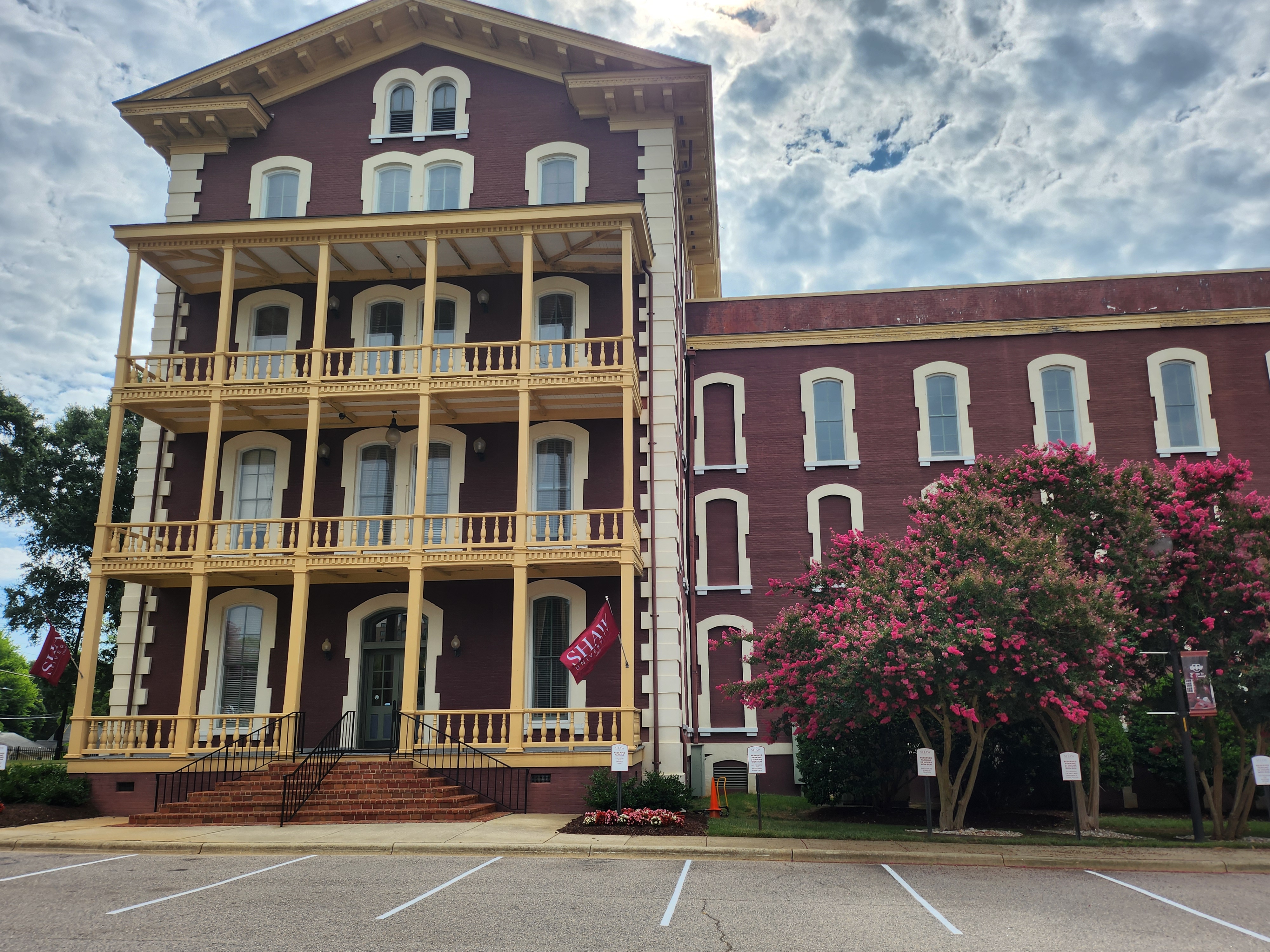
Estey Hall, opened 1873 -- the first college building in the United States constructed for the higher education of Black women. It still stands on the Shaw University campus in downtown Raleigh.
Fast Facts
Enrollment: Approximately 1,100 students
Student-to-faculty ratio: 14:1
Setting: Large city (downtown Raleigh, NC)
Academic calendar: Semester (mid-August to mid-December / mid-January to early May)
Testing policy: Test-blind (SAT/ACT not used in admissions decisions)
All-in cost of attendance: $31,488 per year (2024-25; includes tuition, fees, housing, food, and books)
Honors program: Yes (Honors Program; 3.25+ GPA required)
The Campus Today
Shaw is intentionally small, with around 1,100 students and a student-to-faculty ratio of 14 to 1. Academics are organized into three schools: Arts, Sciences and Humanities; Business and Professional Studies; and Divinity. The majors students complete most often point to where the energy is: business administration, exercise science, criminal justice, psychology, mass communications, and biology.
The campus is not standing still on academics, either. Shaw is launching a Doctor of Education in AI and Moral Agency, the first program of its kind at an HBCU, with the initial cohort beginning Spring 2027. For an institution this old to plant its flag in the ethics of artificial intelligence tells you it intends to shape the next chapter of higher education, not just preserve the last one.
The Feeling on Campus
Numbers describe a school. They do not capture it. What I felt at Shaw was family.
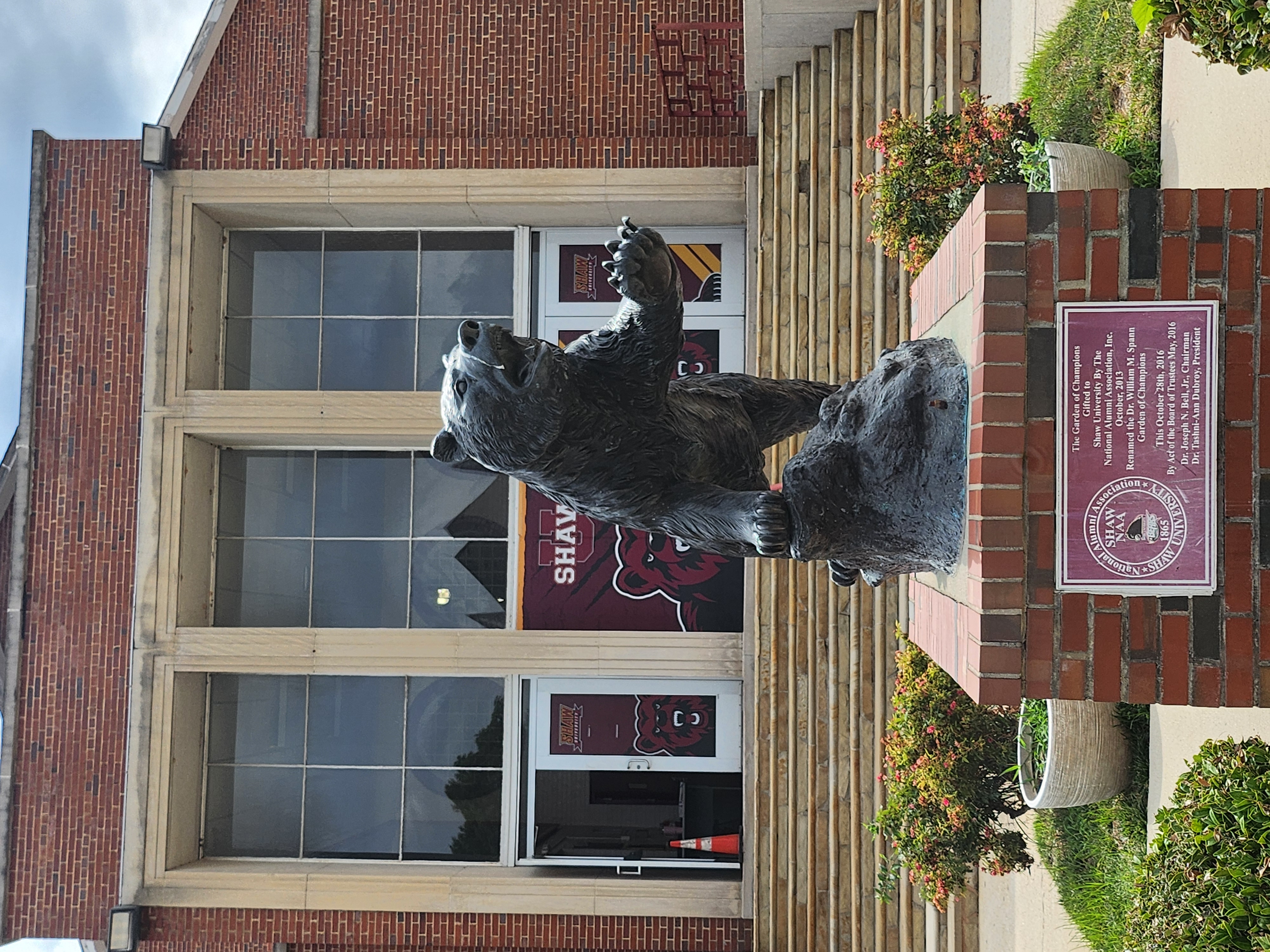
Our student guide returned again and again to one word: experience. The band plays at every event. Greek life is visible everywhere. On a warm day, there is a DJ outside and students dancing between classes. And underneath the energy is a clear thread of care. Package lockers scan your face so nothing gets stolen. Campus police have an office inside the residence hall. The students described the visitation rules not as restrictions, but as the school looking out for them. The message a student receives is steady: you belong here, and we have you covered.
The message a student receives is steady: you belong here, and we have you covered.
The Money, Stated Plainly
Cost is where families get confused, so let me be precise. Shaw's full cost of attendance runs about $31,488 a year. That is the all-in figure: tuition, fees, housing, food, and books together, not tuition alone. Tuition and fees by themselves are about $17,538.
That distinction matters when you compare schools. Set Shaw's all-in $31,488 against the private schools these families often weigh, where the full cost can approach $80,000 a year, and the value becomes obvious. This matters most for the family in the donut hole, the family that earns too much to qualify for need-based aid but too little to write a full tuition check without a plan. Shaw's accessibility is not a discount gimmick. It is the mission expressed in dollars. Access by design.
Shaw's accessibility is not a discount gimmick. It is the mission expressed in dollars. Access by design.
Merit Aid at Shaw
The aid picture at Shaw is better than its quiet reputation suggests. Three out of four first-year students receive institutional grant aid, and it averages around $6,896. Here is the catch worth knowing: Shaw does not hand out an automatic scholarship based on a GPA or a test score, so a family has to pursue it.
Named institutional awards include the Shaw University 1865 Endowment Scholarship, available to college sophomores and above, valued at $1,500. National and regional alumni association chapters offer additional scholarships; requirements and amounts vary by chapter, so contact the alumni office directly for what is currently available. Shaw also points students toward outside money, including the UNCF and the Thurgood Marshall College Fund.
So the plan is straightforward. File the FAFSA early -- TCAS recommends no later than November 30, and Shaw's own priority deadline is March 15 (school code 002962). And call the financial aid office directly to confirm award amounts, because not every scholarship is posted online.
Who This Fits
Shaw is for the student who wants to belong to something with roots, who wants a tight community and a capital city right outside the gates. It fits a family that values heritage and an accessible path to a degree. If your student wants to be a name and not a number, and wants to stand inside a legacy rather than read about one, Shaw earns a real look.
How Shaw Supports Its Students
This is the part I want every parent to read, because it matters more than any ranking. Shaw has built real structure to catch students before they fall behind.
Early-alert system: when a student starts slipping, a faculty member flags it and someone reaches them within 24 hours to build an academic recovery plan.
First-Year and Second-Year Experience programs target the two years when students are most likely to stumble.
Faculty advisor in your major -- every student has one, assigned from inside their school.
Free tutoring at the Academic Support Center, plus a dedicated Writing Center.
This is a small campus -- 14 students to every faculty member -- where it is hard to disappear.
My Take
Shaw will not win a family over with a new glass building or a famous name, and it does not try to. What it offers is harder to manufacture. You step onto the campus that started Black higher education in the South, and you feel that lineage in how the community carries itself.
Now the candid part. You will hear that graduation rates at schools like Shaw run lower than at the privates families compare them to. That is true, and it is a starting question, not a verdict. A rate like that reflects the outside pressures students carry in with them more than it measures how much the school invests in them, and Shaw has answered those pressures with the support above.
So do not guess. Ask the direct questions on your visit. How fast does someone reach my student if they fall behind? Who is their advisor, and how often will they meet? What tutoring is free, and how does my student get it? What happens if my student lands on academic probation? Shaw has real answers to all of it. For the student who wants this legacy and this community, with a family that walks in asking the right questions, Shaw is a place worth standing inside.
Frequently Asked Questions About Shaw University
Is Shaw University an HBCU?
Yes. Shaw University in Raleigh, North Carolina, founded in 1865, is the first HBCU in the American South. HBCUs are historically Black, not exclusively Black, and are open to everyone.
How much does Shaw University cost?
Shaw's all-in cost of attendance is about $31,488 per year (2024-25), covering tuition, fees, housing, food, and books. Tuition and fees alone are about $17,538. About 75 percent of first-year students receive institutional grant aid averaging around $6,896.
Does Shaw University require SAT or ACT scores?
No. Shaw is test-blind. SAT and ACT scores are not used in admissions decisions. Admission is based on the transcript and academic record.
What is Shaw University known for?
Shaw is known as the first HBCU in the American South and for a legacy of documented firsts: Estey Hall (1873), the first U.S. college building for the higher education of Black women, and Leonard Medical School (1880), the first four-year medical school to train Black physicians in the United States.
What majors does Shaw University offer?
Shaw organizes academics into three schools: Arts, Sciences and Humanities; Business and Professional Studies; and Divinity. The most frequently completed majors are business administration, exercise science, criminal justice, psychology, mass communications, and biology.
What is the acceptance rate at Shaw University?
Shaw accepted 80 percent of applicants in Fall 2024 per IPEDS federal data. Admission is not test-based, and the application fee is $25. Shaw appears to use rolling admissions, though the financial aid priority deadline is March 15.
Ready to Talk Through Your Student's List?
If you want to know whether Shaw belongs on your student's list, that is exactly the kind of decision worth talking through before you build the list, not after. Book a complimentary 30-minute Discovery Session. An intake form is required to schedule your conversation.
